 AI-powered, Human-reviewed.





Why Indian D2C Brands Are Finally Making Subscriptions Work
The numbers are hard to ignore. India’s subscription eCommerce market was valued at US $10.34 billion (≈ ₹88,479 crore) in 2024 and is projected to reach US $374.24 billion by 2033, a near 36x jump in under a decade. Subscription commerce in India grew 45% YoY in 2026, led by wellness, personal care, coffee, baby care, and pet care brands.
So why did subscriptions struggle for so long?
The honest answer: the 2021 RBI recurring payment guidelines broke most early subscription setups overnight. Monthly card payments under ₹5,000 started failing at scale. Brands that had built billing flows on auto-debit mandates suddenly faced churning subscribers they hadn’t planned for. It was a painful reset.
UPI AutoPay changed that. By January 2025, UPI AutoPay had captured over 53% of all recurring payment volume in India, up from 33% just a year earlier, processing 175 million transactions that month alone. For D2C brands on Shopify, this is the infrastructure unlock that makes subscriptions viable at scale.
The categories leading the wave are predictable: supplements and protein, skincare and hair care, specialty coffee and tea, baby care (diapers, wipes, baby food), and pet food. These are all high-frequency, habit-driven categories where the product runs out and the customer needs to reorder anyway.
Here’s the honest framing: subscriptions are still harder in India than in the West. Price sensitivity is real. COD culture shrinks your subscription funnel the moment you remove cash-on-delivery. Subscription fatigue from OTT platforms, grocery apps, and fintech services means your bar for perceived value is higher than ever.
But the brands that crack retention win disproportionately. The problem isn’t subscriptions, it’s that most brands treat subscribers like one-time buyers.
The Real Cost of Ignoring Subscriber Relationships
Let’s present the numbers clearly.
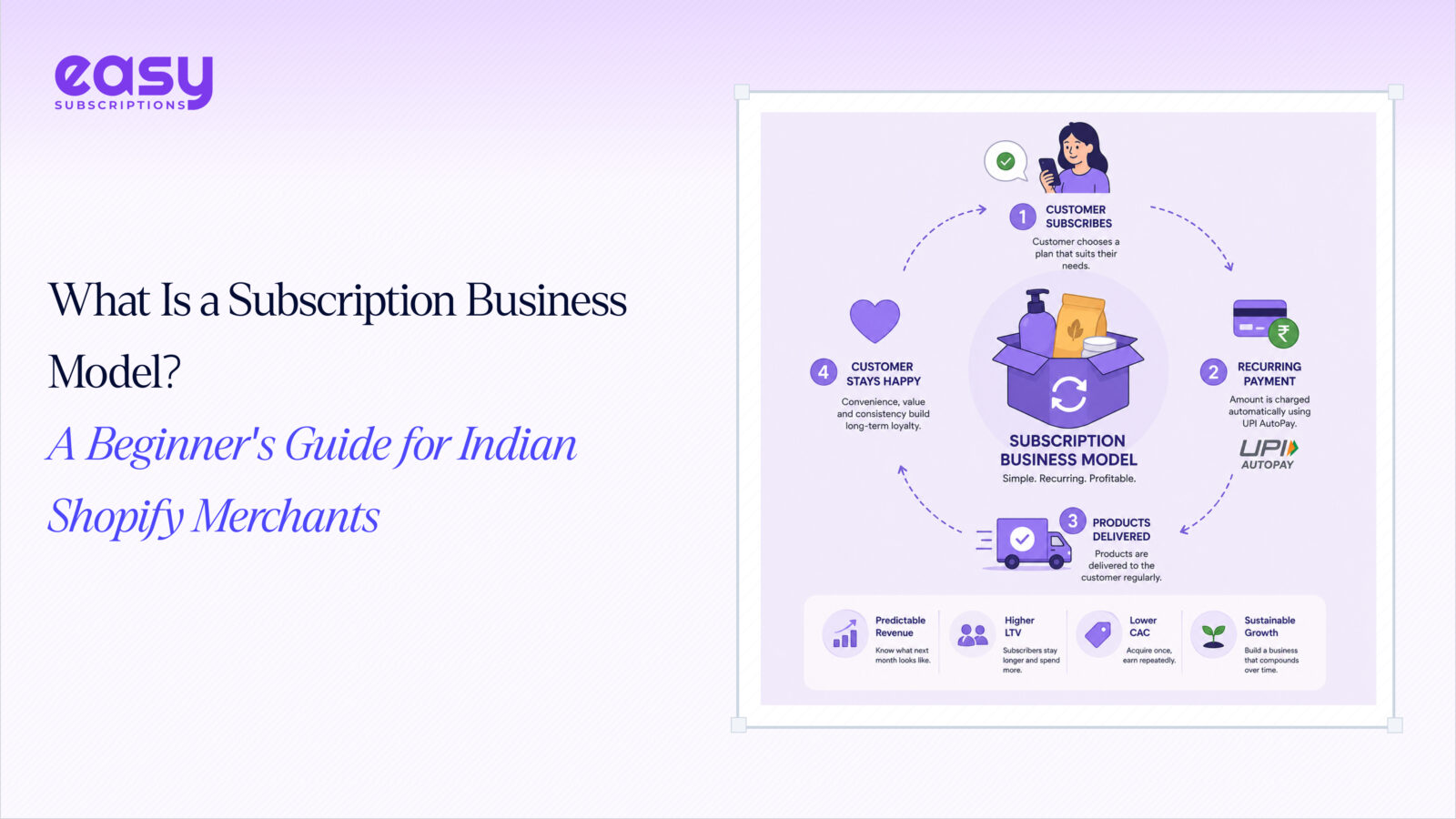
A one-time buyer generates ₹2,500 in lifetime value. A subscriber generates ₹8,500 – 3.4x more. Both cost the same ₹450 to acquire. That LTV gap is the entire business case for subscriptions.
But most Indian D2C brands are leaking subscribers faster than they acquire them. Average monthly churn in Indian D2C sits at 12–18%, which means 60–80% of subscribers are gone within 6 months. Here’s where that churn actually comes from:
| Churn Reason | % of Churn | What It Tells You |
| Too much product / overstock | 30% | Frequency is wrong |
| Too expensive | 25% | Value isn’t clear enough |
| Forgot they subscribed | 15% | Communication is missing |
| Product didn’t work as expected | 15% | Onboarding failed |
| Hard to cancel | 15% | UX is creating resentment |
The critical insight: 70% of churn is fixable through better communication and flexibility, not pricing. Only 25% is genuinely about price.
A subscriber who churns in month 2 generates ₹900 in revenue. One who stays 12 months generates ₹8,500. The relationship is the business model. See: How to Reduce Churn in Shopify Subscriptions
The 4 Stages of a D2C Subscription Relationship (India Edition)
Most brands think about subscriptions as a billing problem. They’re not. They’re a relationship problem, with four distinct stages, each with its own failure mode.
Stage 1: Acquisition: Win the First Commitment
India-specific friction is real here. Price sensitivity plus COD culture means subscribers need a low-risk entry point, not a long-term commitment.
What works at acquisition:
- First-box discount (not ongoing – ongoing discounts train price sensitivity)
- Highlight pause/skip upfront – this reduces commitment fear more than any discount
- Show the UPI AutoPay badge – it’s a trust signal that tells Indian customers the payment process is familiar and safe
- Keep the first subscription interval short: 30 days, not 90
Categories that convert best: supplements (protein, vitamins), skincare basics, specialty coffee, pet food. These are products customers already know they’ll reorder.
Stage 2: Onboarding: The First 30 Days Decide Everything
60–80% of Indian D2C brands lose subscribers within 6 months. Most of that churn happens in months 1 and 2, before the subscriber has built any habit around the product.
What to do in the first 30 days:
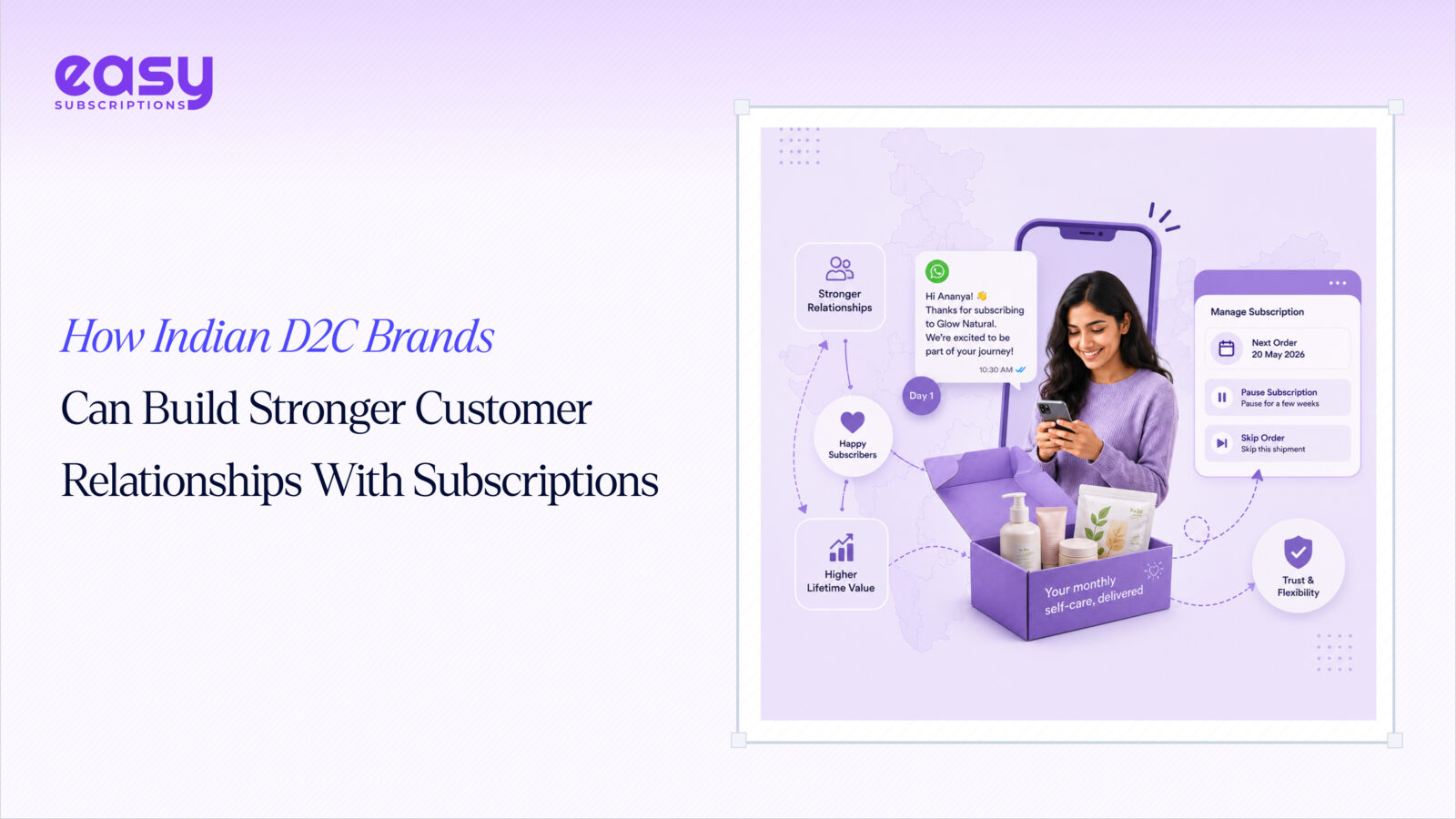
- A WhatsApp welcome message within 24 hours of the first order, not an email, a WhatsApp message
- Usage reminder on day 10 – before the product runs out, not after
- Delivery confirmation with a next-box preview – make the subscriber feel the relationship is ongoing, not transactional
What NOT to do: send only transactional emails and go silent after the first shipment. That silence is where churn begins.
Stage 3: Retention: Keep the Relationship Alive
This is where subscription retention strategies either compound or collapse. Five levers that Indian D2C brands are actually using:
1. Pause & Skip Flexibility
“Hard to cancel” drives 15% of churn. Give subscribers a customer portal where they can pause, skip, or change frequency themselves, without contacting support. Brands that add a pause option reduce cancellations by 20–30%. The logic is simple: a paused subscriber is not a churned subscriber.
2. Loyalty Tiers for Long-Term Subscribers
Reward month 3, 6, and 12 milestones with free products, exclusive access, or bonus points. This is how you build D2C brand customer loyalty in India, not through discounts, but through recognition. Brands like Mamaearth have shown that milestone-based loyalty creates emotional connection that price-matching never can.
3. Personalization at Scale
Use order history to suggest frequency adjustments. If a customer ordered twice last month, message them: “Looks like you’re going through this faster than expected – want to switch to bi-weekly delivery?” Indian subscribers respond strongly to feeling seen. This is also the core of any serious dtc subscription strategy in India: use the data you already have.
4. WhatsApp for Relationship Touchpoints
WhatsApp open rates in India sit at 90%+ versus 15–20% for email. Use it for renewal reminders, product tips, and exclusive subscriber offers. Not just order updates. The brands winning at subscription customer retention in India treat WhatsApp as a relationship channel, not a logistics notification tool.
5. Dunning Recovery via UPI AutoPay
Failed payments are silent churn. UPI AutoPay has a failure rate of 8–15% mostly due to insufficient balance or real-time authorization issues. Set up automated retry logic plus a WhatsApp nudge for failed UPI mandates. Recovering 1 in 3 failed payments can reduce overall subscription churn in India by 5–8 percentage points. That’s not a small number.
Stage 4: Winback – Recover Cancelled Subscribers
According to Recurly’s 2024 State of Subscriptions report, 25% of new sign-ups globally come from former subscribers. That’s 1 in 4 new subscriptions being a winback, and it’s the most cost-effective acquisition channel you have because these customers already trust you.
India-specific tactic: send a winback offer via WhatsApp 7 days after cancellation, “We noticed you left.” Here’s ₹200 off your next box.”
But don’t lead with the discount. Ask why they cancelled first – a single-question WhatsApp poll takes 10 seconds and gives you data worth far more than the ₹200 you’d otherwise spend blindly. Brands that ask get actionable insight. Brands that discount immediately train subscribers to churn on purpose.
How to Measure Subscriber Relationship Health
Track these six metrics. If you’re not measuring them, you’re flying blind on your Shopify subscriptions India setup.
| Metric | What It Measures | Indian D2C Benchmark |
| Monthly Churn Rate | % subscribers lost per month | 12–18% (aim for <8%) |
| Subscriber LTV | Total revenue per subscriber | ₹8,500 avg (3.4x one-time buyer) |
| LTV:CAC Ratio | Return on acquisition spend | Aim for 3:1 minimum |
| Pause Rate | Subscribers pausing vs cancelling | Higher pause = healthier relationship |
| Dunning Recovery Rate | Failed payments recovered | Target 30%+ recovery |
| WhatsApp Open Rate | Communication engagement | 90%+ achievable in India |
The pause rate is the one most brands ignore. A rising pause rate means subscribers are choosing to stay just not right now. That’s a relationship worth protecting. A rising cancellation rate means the relationship is broken.
Common Mistakes Indian D2C Brands Make With Subscriptions
We see the same mistakes repeatedly. Most are fixable in a single sprint.
- No customer portal, subscribers who can’t self-serve pause/skip will dispute charges or churn. Non-negotiable in 2026.
- Ignoring dunning: UPI mandate failures are silent. Without automated retry, you lose revenue without knowing why.
- Flat discount forever “10% off every order” trains price sensitivity. Switch to milestone rewards after month 3.
- Email-only communication, India runs on WhatsApp. Email open rates: 15–20%. WhatsApp: 90%+. The math is obvious.
- No frequency options, Indian households have different consumption cycles. Offer 30/45/60/90-day intervals, not just monthly.
- Launching without testing the UPI mandate flow: test with a ₹1 mandate before going live. Seriously. Do this.
How to Get Started on Shopify India (4 Steps)
Step 1: Choose your subscription type.
Replenishment (supplements, coffee, pet food) or curation box (beauty, snacks, baby). Replenishment is lower-risk to start, the customer already knows they’ll reorder.
Step 2: Connect a subscription-ready payment gateway: Shopify payment gateways for subscription businesses.
Razorpay or Cashfree for UPI AutoPay support. Both integrate natively with Shopify and handle the e-mandate registration flow that the 2021 RBI guidelines require.
Step 3: Install Easy Subscriptions
Handles billing, customer portal, dunning management, loyalty rewards, and pause/skip in one place. No developer needed, setup under 10 minutes.
Step 4: Set up your retention system before launch.
Configure WhatsApp reminders, dunning retry logic, and pause option in the customer portal before your first subscriber signs up. Retrofitting retention is much harder than building it in from day one.